
Why Smart Companies Are Looking at Central Asia as a Tech Talent Advantage
Global tech hiring has reached a breaking point. Salaries in Silicon Valley exceed $300,000, while major European hubs have lost their cost advantage due to wage inflation. Even traditional outsourcing destinations, from India to Eastern Europe, face 15-25% annual attrition. The result would be higher costs, constant knowledge loss, onboarding fatigue, and unstable delivery. To maintain project continuity and quality, global companies are rethinking geography. And that’s where Central Asia enters the conversation.
The Underestimated Talent Pool
In the first instance, we should underline that Central Asia’s developer community isn’t what most people imagine. Forget outdated stereotypes about infrastructure or language barriers; this region is home to over 300,000 IT professionals, backed by government programs targeting even further expansion in 2025. Kazakhstan alone aims for over 100,000 more specialists and boasts a $1.4 billion IT services market with international players like Microsoft and Andersen Inc., while Uzbekistan houses more than 40 foreign companies in its IT Park.
What sets this workforce apart is rigorous technical education built on mathematics and engineering fundamentals, producing engineers skilled in systems thinking and complex problem-solving instead of rote framework expertise. Much of their work centers not on job-hopping or CV inflation, but on building technical careers with deep domain expertise. Developers in Bishkek, Almaty, and Tashkent build diverse software solutions—from enterprise systems for clients like Fujitsu to global real-time user platforms—all with less turnover pressure than in Bangalore or Warsaw.
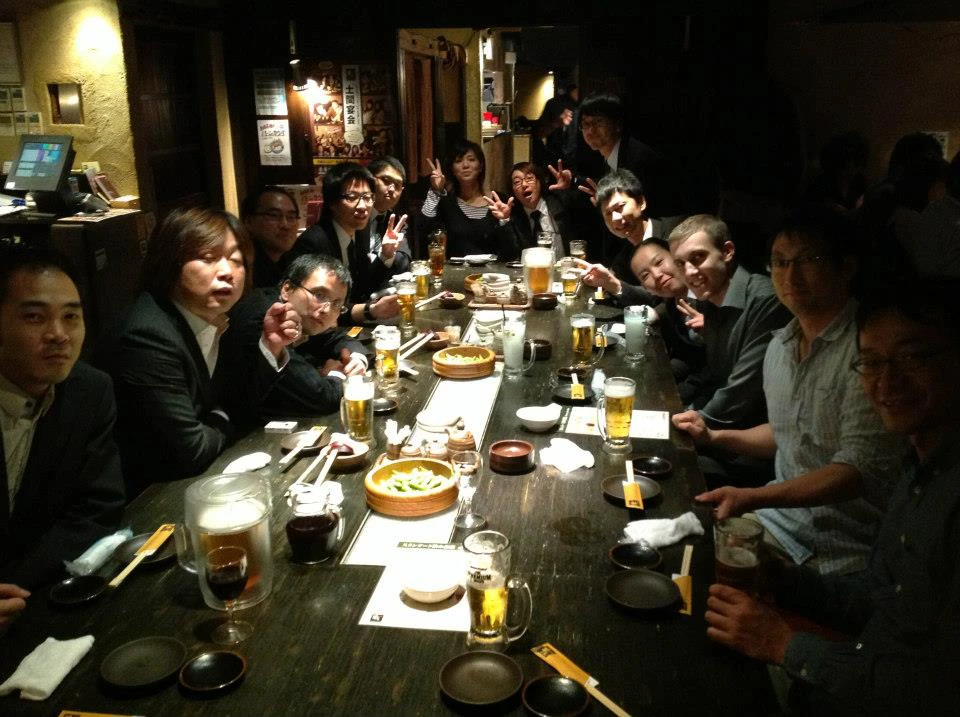
At Unique Technologies (UT), this translates to real business value: engineers stay for years, deepening their expertise, mentoring juniors, and forging stable client partnerships. Investments that make no sense in markets where the average tenure is under two years. UT engineers work on enterprise-grade projects that nurture lasting skill development, not just resume fodder.
Technical Depth That Surprises Skeptics
The previous statement is perfectly in line with the current state of things: Central Asia’s dynamic market has shaped versatile developers who move between fintech, logistics, AI, and complex integrations rather than pigeonholed routine outsourcing. Working across full stacks and infrastructure builds a holistic technical mindset. Such versatility is the result of engineers seizing international opportunities, mastering multiple roles, and maintaining multidisciplinary learning as a habit.
This multidisciplinary capability proved essential when Unique Technologies engineered enterprise systems for Fujitsu: our teams had to balance high performance, reliability, and regulatory compliance under strict Japanese QA protocols. This wasn’t just regional success; it was proof of true engineering maturity. Elsewhere in the region, Astana Hub in Kazakhstan and IT Park Uzbekistan anchor thriving startup ecosystems, with global clients and ongoing export growth.
The Communication Advantage Nobody Mentions
Technical capability is only half the equation. The other half, often underestimated until it becomes a problem, concerns those moments when communication breakdown destroys more projects than any technical challenge. Recent studies confirm this: communication gaps cost companies hundreds of hours in lost productivity and revision cycles; companies like Project.co quantify the impact in operational dollars each year.
Central Asian developers’ value isn’t just in English proficiency but in real business acumen. Educated in analytical and practical problem-solving, exposed to Russian, European, and Asian business cultures, and often running their own ventures, they think and communicate like solution architects. The result is clearer requirements gathering, faster feedback cycles, and the ability to deliver not just what was asked for, but what is actually needed.
The Retention Economics That Actually Work
Another pain point to be noticed: every replacement hire disrupts delivery, fragments hard-won knowledge, and sets back project velocity. In India and Eastern Europe, one in four developers quits annually, with senior talent taking months of ramp-up with them. Central Asia, by contrast, offers talent stability rooted in strong local incentives. For example, Tech Parks in Uzbekistan and Kyrgyzstan offer tax exemptions for export-oriented companies, while Astana Hub provides equity-free accelerators for team growth instead of talent churn.
These regional policies keep developers building long-term careers. They foster sustainable talent pipelines: teams that stay together longer, accrue deep collective experience, and deliver continuity that global clients can count on.
Strategic Positioning for the AI Era
The new premium in global tech is developing engineers who understand systems, architect solutions for real problems, and bridge technical and business perspectives, not just those who can code. Central Asia is uniquely positioned: strong mathematics education, wide exposure to international projects, and active government support for AI adoption. Across the region, AI is already in production:
- In Kazakhstan, the government launched an ambitious National AI Development Concept targeting public sector transformation and infrastructure readiness through 2029. The country is building the Artificial Intelligence Research Institute at Nazarbayev University with international research partnerships and investment in computational infrastructure to position itself as Central Asia's AI hub.
- In Uzbekistan, IT Park companies are integrating machine learning into fintech platforms and logistics optimization systems, moving beyond experimentation to customer-facing applications that deliver measurable business value.
- In Kyrgyzstan, development teams are deploying AI-powered tools for practical business problems. Unique Technologies, for example, has built language-based data extraction systems, smart logistics platforms, and predictive analytics dashboards: production systems solving real customer challenges.
This proves that AI and ML technologies across Central Asia have moved beyond experimentation to daily production use. The region is increasingly seen as a base for outbound AI companies and infrastructures. Initiatives like Astana Hub illustrate this shift: global companies now partner with the region for AI innovation capacity, not merely reduced development costs.
Time Zone Geometry That Enables Real Collaboration
Also, practical logistics matter. Central Asia operates in UTC+5 to UTC+6, creating something rare: meaningful overlap with multiple global regions simultaneously.
For European companies, this means 3-4 hours of real-time collaboration during core business hours: not “we'll catch up asynchronously,” but actual back-and-forth problem-solving when issues arise. Asian markets get even better coverage: nearly complete overlap with business hours across Tokyo, Seoul, Singapore, and Bangalore.
North American companies gain true follow-the-sun development. Work progresses while US teams sleep, with 2-3 hours of overlap for synchronous communication during morning/evening hours. It's the Goldilocks position: not too far for zero overlap (like pure Asian offshoring), not too close for redundant hours (like Latin American nearshoring), but perfectly positioned for efficient distributed collaboration.
The Contrarian Bet That’s Paying Off
Eventually, smart companies are already here: major US, Japanese, and global clients have chosen Central Asian partners for technical excellence and delivery reliability. Investors note not just the cost advantage, but the stability, versatility, and communication competence unique to this region. The fundamentals guarantee ongoing industry expansion.
The question now is not whether Central Asia’s tech region will succeed but whether your organization will benefit from first-mover advantage or compete later at premium rates as the market matures.
Unique Technologies has spent two decades building what others are just discovering: world-class technical talent and client delivery in the heart of Central Asia. Let’s put this expertise to work for you.