
Insights From the Field
Perspectives on software development, engineering culture, and technology trends from teams building solutions globally.

Flutter vs React Native in 2026: How to Choose the Right Framework for Your Next Mobile Product
The Flutter vs React Native debate never fully goes away. It resurfaces every time a CTO faces a new mobile product decision, every time a team has to justify a framework choice to a board, every time a developer posts a comparison that immediately draws a hundred disagreeing comments. What makes 2026 different is that both frameworks have changed enough that most comparison content online — including articles written just two years ago — is now materially wrong about both.

Japan’s Cloud Market at $84 BN by 2032: Infrastructure Engineering Opportunities for Regional Tech Partners
Japan’s cloud computing market is growing faster than most enterprise technology leaders realize. The numbers are not incremental: Fortune Business Insights’ projections emphasise that the market will expand from $23.4 billion in 2025 to $84.1 billion by 2032, at a compound annual growth rate of 20%. Even the more conservative estimates, IDC Japan’s $29 billion for 2025 growing at over 15% annually, put Japan among the four largest cloud markets globally and the largest in Asia outside China.
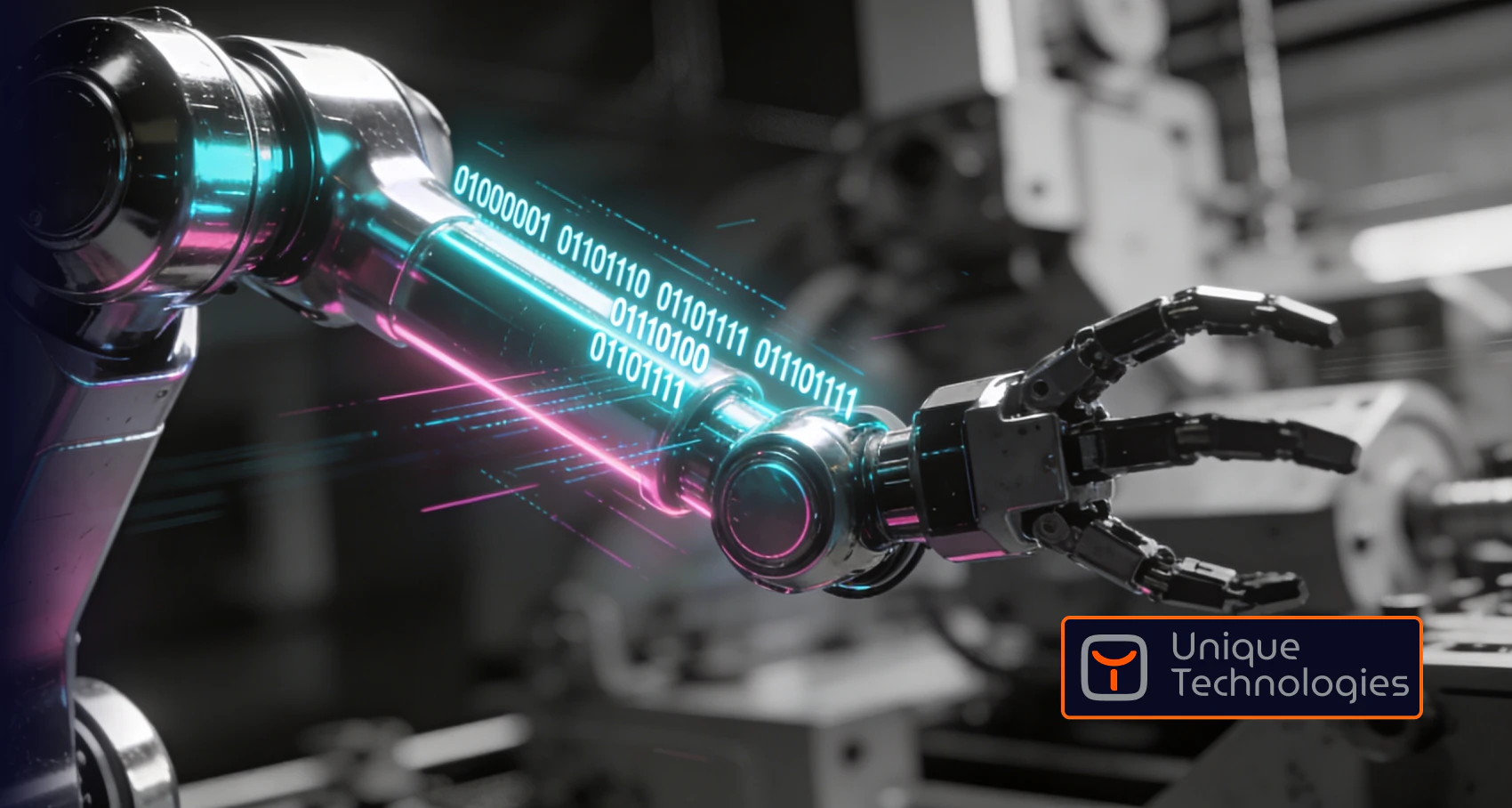
Beyond the Hardware Advantage: Why Japan’s Physical AI Future Depends on Software
Japan’s industrial robotics infrastructure is, by almost any measure, the most sophisticated in the world. Fanuc, Yaskawa, Kawasaki, Denso, and a network of precision component suppliers have spent decades compounding a manufacturing advantage that no country has been able to replicate at scale. According to the IFR World Robotics 2025 report, Japan ranks fourth globally in robot density at 446 units per 10,000 manufacturing employees — behind Korea, Singapore, and Germany, and growing at 5% annually since 2019. Its hardware supply chain is structurally embedded in global automotive, semiconductor, and consumer electronics production.

The New Rules of Distributed Team Management: Building High-Performance Cross-Cultural Engineering Squads
Japan’s engineering labor market is pushing many companies into a new operating reality. In ManpowerGroup’s 2025 Japan release, 77% of employers said they were struggling to secure talent, still above the global average of 74%. In the prior survey year, Japan stood at 85%. At the same time, METI materials point to structural shortages in science and engineering graduates and in workers capable of using AI and robotics, while Kansai METI now frames highly skilled foreign talent as increasingly important to local growth. This is why the conversation is changing. Distributed engineering is no longer mainly about labor arbitrage. It is becoming a question of strategic team extension.

Event-Driven Architecture and Serverless: Rethinking the Backend for High-Load Systems
High-load backend systems rarely fail because one service is poorly written in isolation. More often, they begin to lose stability because too many services are forced to respond, coordinate, and complete work at the same time. A synchronous architecture can perform well for a long time, especially when traffic is predictable and service dependencies are limited. But as throughput grows, integrations multiply, and latency budgets tighten, the same architecture can become fragile in ways that are difficult to see early.

FinOps for AI: Managing the Hidden Costs of GPU Clusters, Inference, and Training Pipelines
For the past decade, cloud economics have been relatively stable and predictable for most organizations. Engineering teams built services on elastic infrastructure, scaled horizontally, and relied on mature FinOps practices to keep spending aligned with business outcomes. Metrics such as CPU utilization, storage consumption, and network traffic provided clear signals for how infrastructure investments translated into product value.
Have a Complex Project in Mind?
We’ve been solving challenging technical problems for 20+ years. Share your requirements and let’s explore how we can help.