Live Power: Real-Time Event Staff Management Platform
Unique Technologies built a mission-critical command platform for Live Power, one of Japan’s leading event production companies, enabling real-time coordination of 10,000+ crew members across major concerts, festivals, and live events with instant mobile updates and intelligent workforce management.
Overview
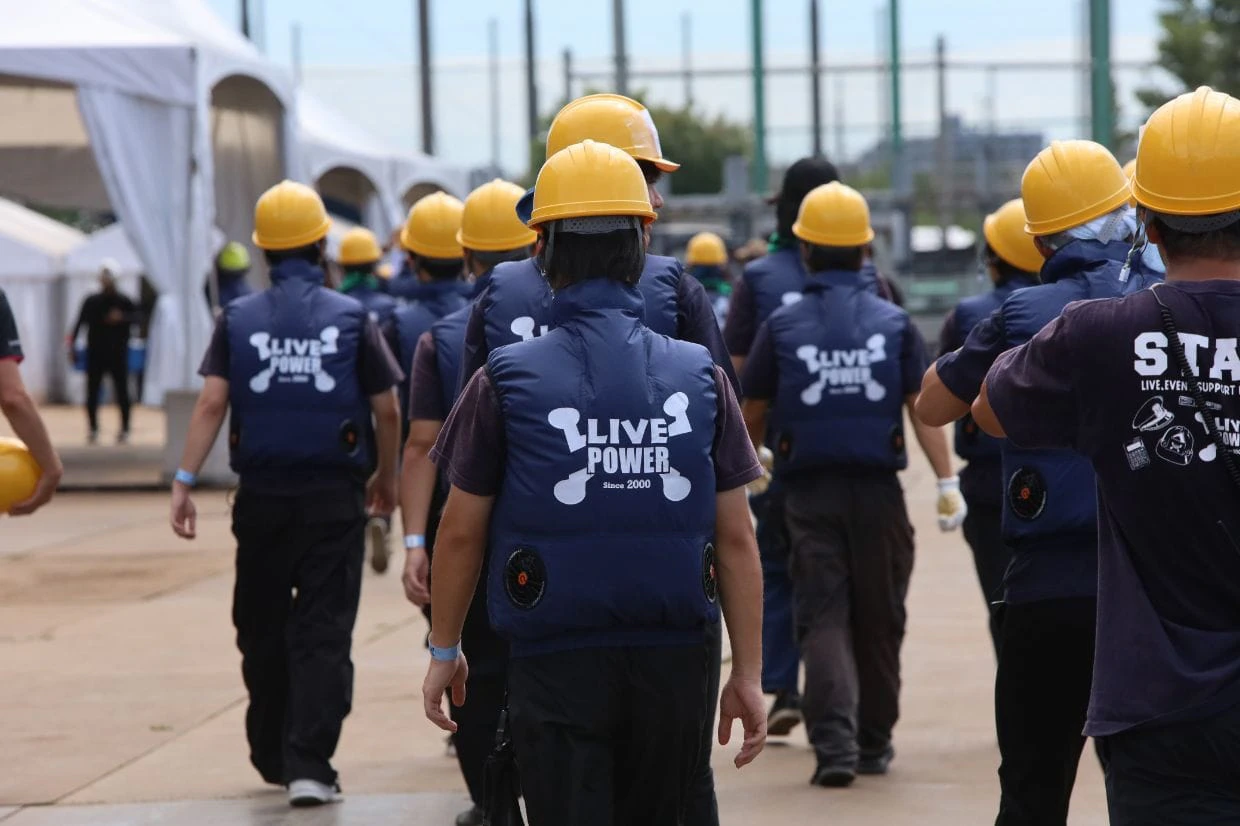
When 70,000 fans pack into a stadium for a sold-out concert, nobody sees the small army making it happen. Backstage, hundreds of crew members move equipment, manage security zones, coordinate artist needs, and solve problems as they emerge—all in real time.
For Live Power, one of Japan’s leading event production companies, orchestrating these massive operations meant battling spreadsheets, group texts, and constant chaos. Managing staff for a 500-person event was challenging. Coordinating 10,000+ crew members across multiple concurrent festivals and concerts was nearly impossible with traditional tools. Live Power needed a real-time command platform designed for the scale, speed, and unpredictability of Japan’s live entertainment industry.
Key metrics
10,000+ active crew members managed simultaneously without performance issues
50,000 attendees at launch event—one of Japan’s largest summer music festivals
800 crew members coordinated across 12 venue zones over 3 days
Challenges
Real-Time Coordination at Unprecedented Scale
Building a system that could instantly synchronize updates across thousands of concurrent users while maintaining sub-second response times required sophisticated architecture. The challenge wasn’t just technical performance. It was ensuring that critical updates reached the right people at the right time, even during network congestion when everyone’s checking their phones simultaneously.
Mobile-First for Chaotic Environments
Crew members don’t sit at desks. They’re running between stages, managing equipment in loud environments, and solving problems on their feet. The interface needed to work one-handed, be readable in bright sunlight and darkness, deliver critical information at a glance, and function reliably even when cellular connectivity was intermittent or overloaded.
Intelligent Scheduling Without Operational Rigidity
The old manual scheduling process took days per event but offered complete flexibility. We needed to automate 90% of the work while preserving the ability to make judgment calls and rapid changes. Overly rigid systems fail in live event environments where adaptability is survival.
Zero-Downtime Architecture for Mission-Critical Operations
A scheduling platform that crashes during an active event doesn’t just create inconvenience—it threatens artist safety, regulatory compliance, and client relationships. The platform required architecture that could handle worst-case scenarios: database failures, traffic spikes, and infrastructure problems during the exact moments when reliability mattered most.
Data Compliance in the Japanese Market
Japan’s data protection requirements demanded that sensitive staff information, operational data, and client details remain properly isolated and stored within Japanese data centers. The architecture needed geographic sharding while maintaining global performance standards and enabling seamless operations for international events.
Solutions and Implementation
Event-Driven Microservices Architecture
We built the platform on event-driven microservices that enable changes to propagate instantly across all connected systems. When a manager reassigns staff, the update flows simultaneously to mobile apps, management dashboards, and reporting systems, typically completing within one second even under heavy load.
Each microservice operates independently with its own database and business logic, preventing cascading failures. If the reporting service experiences issues, staff assignments and mobile notifications continue unaffected. This architectural isolation proved essential during high-stress live events where partial system degradation cannot impact core operations.
System Flow

(Manager Action → Event Queue → Parallel Processing:

  ├─ Mobile Push Notifications

  ├─ Dashboard Updates

  ├─ Assignment Confirmations

  └─ Audit Log Recording)
Geographic database sharding keeps Japanese user data in Tokyo data centers for regulatory compliance and optimal performance, with automatic failover to backup regions ensuring continuity even during infrastructure problems.
Smart Scheduling Engine
The scheduling system transformed what previously took days into minutes through intelligent automation:
AI-Assisted Matching
The algorithm analyzes staff skills, certifications, geographic location, past performance ratings, and availability to suggest optimal assignments. For a typical 500-person event, it generates recommended staffing in under 30 seconds, work that previously consumed days of HR time.
Conflict Detection
The system automatically identifies double-bookings, certification mismatches, mandatory break violations, and overtime threshold issues before assignments are finalized, preventing problems that previously surfaced only during events.
Template Libraries
Production managers can save proven staffing patterns for different event types (festival layouts, arena concerts, corporate events) and apply them as starting points for new events, encoding organizational knowledge that previously lived only in experienced managers’ heads.
Bulk Operations
Managers can assign entire teams or departments with a few clicks, then make individual adjustments as needed. The interface supports both broad strokes and fine details without forcing users to choose between efficiency and precision.
Mobile-First Crew Interface
We designed the mobile experience for real-world event environments—loud, fast-paced, often with poor connectivity:
- QR Code Check-In: Staff scan codes at venue entry points, instantly updating their status and triggering any pending notifications. This replaced manual sign-in sheets that often went missing or remained unprocessed until after events ended.
- Progressive Web App Technology: Rather than forcing separate iOS and Android app downloads, the PWA delivers native-app performance through any mobile browser. Updates deploy instantly without app store approval delays, and users always run the latest version.
- Offline Mode: The app caches essential data—today’s schedule, venue maps, and emergency contacts—so crew members can access critical information even in basement loading docks or backstage areas without connectivity. Changes sync automatically when the connection returns.
- Notification Intelligence: The system distinguishes between informational updates (which queue for next app open) and critical changes (which trigger immediate push notifications). During a weather-related venue change, 800 staff members received and acknowledged new assignments within 12 minutes.
Dynamic Reallocation Engine
Live events demand constant adaptation. The reallocation interface enables:
- Drag-and-Drop Reassignment: Managers can visually move staff between zones, roles, or time slots with immediate effect. The interface shows real-time capacity, skill coverage, and conflict warnings as managers make changes.
- Smart Suggestions: When a manager needs to fill a specific role, the system recommends nearby crew with relevant skills who have light current workloads. During emergencies, this cuts decision time from minutes to seconds.
- Cascading Updates: Reassigning one person might affect break schedules, team balances, or equipment handoffs. The system automatically identifies and suggests related adjustments, preventing the ripple effect problems that plagued manual reallocation.
Enterprise Security and Compliance
Role-based access controls ensure that crew members see only their own schedules and immediate team information, while zone supervisors access broader team data without visibility into other zones or financial details. Production managers maintain operational oversight without exposure to HR-sensitive information, and executives receive strategic analytics while respecting individual privacy.
The security model meets Japan’s stringent data protection requirements while enabling the fluid collaboration that live event production demands.
Key Results
Launched at scale: 50,000 attendees, 800 crew, 12 zones, 3 days
Planning time reduced from 3-5 days to 2-3 hours
Emergency changes reduced from 45-90 minutes to 5-10 minutes
HR time on scheduling reduced by 80%
Weather-driven relocation of hundreds of staff completed in 12 minutes
95% of the crew actively use the mobile app
Check-in reduced from 8-12 minutes to under 30 seconds
Technology Stack
Key Technologies
WebSocket for real-time communication
JWT authentication
RESTful API
Geolocation API